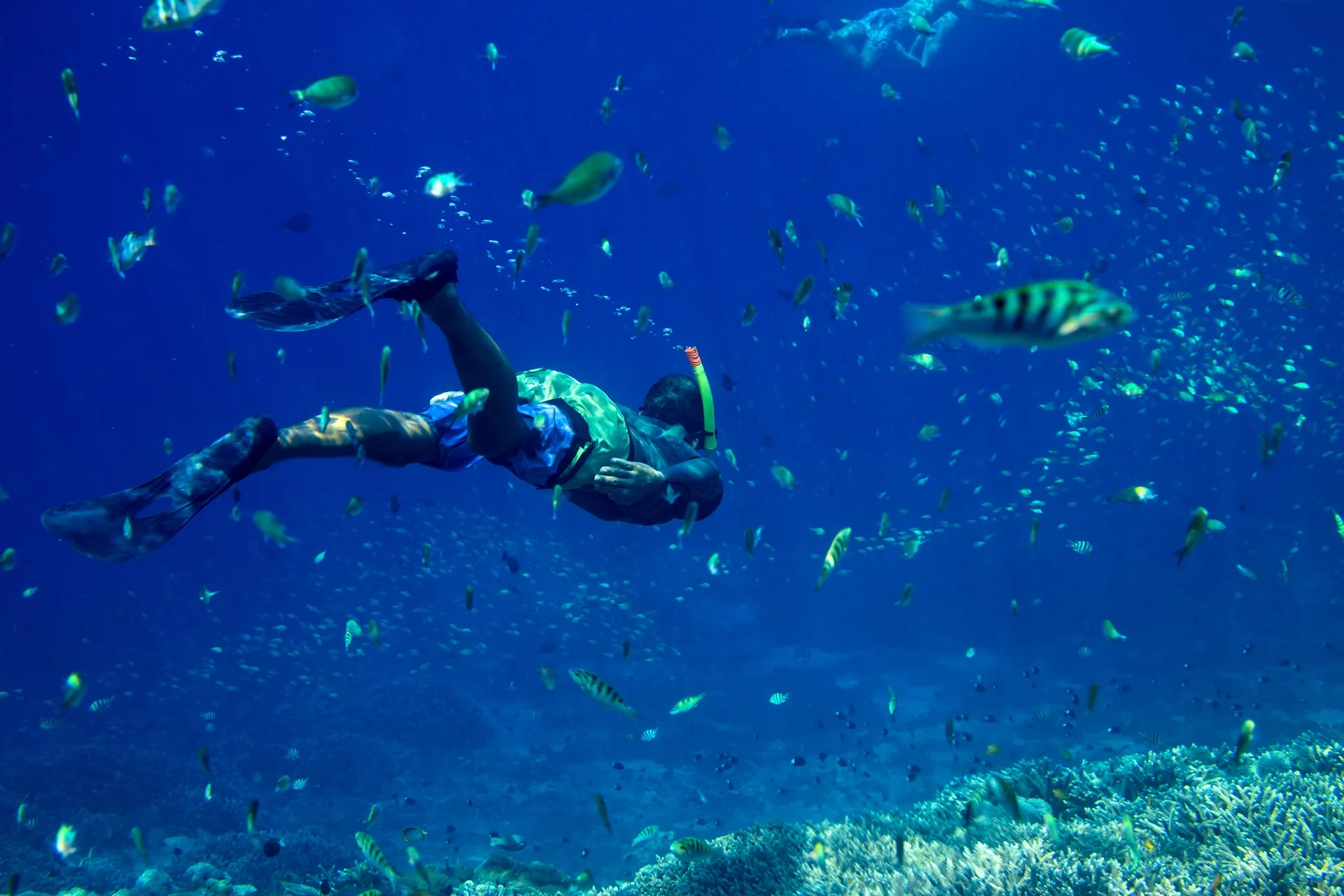

Kenya's reputation is built on the savanna, which means its reefs are chronically undersold. The coastline is fringed by coral for most of its length, and a series of marine national parks have been protecting sections of it since the late 1960s, making them among the oldest in Africa.
The result is warm, shallow, accessible snorkelling within a short boat ride of the shore, at a fraction of what comparable water costs elsewhere in the Indian Ocean. Here is how to plan it.
Where the reefs are
The fringing reef runs roughly parallel to the coast, close enough to shore that a boat transfer is measured in minutes rather than hours. At low tide the reef crest creates a lagoon between it and the beach, which is why the water at places like Diani is so consistently flat and pale.
Three areas account for most of the good snorkelling.
Watamu
The strongest all-round choice. Watamu Marine National Park was gazetted in 1968 and the protection shows: coral gardens in water shallow enough that you can see clearly from the surface, and fish populations that have never been fished out.
The bay is sheltered, which makes it the most reliable option for anyone nervous in open water or bringing children. Green turtles are resident and are seen regularly rather than occasionally. Boats leave from the beach at high tide and the crossing takes minutes.
Watamu is also the base for Mida Creek, which is a mangrove system rather than a reef, but worth an afternoon for the birdlife and the sunset. More on Watamu.
Diani and the south coast
Diani has the better beach and slightly less dramatic snorkelling directly offshore, though the reef is still good and the convenience is unmatched if you are staying there anyway.
The serious trip from the south coast is Kisite-Mpunguti, near Wasini Island towards the Tanzanian border. It is a full-day excursion, usually by dhow, and the water clarity is the best on the Kenyan coast. Dolphins are common on the crossing. The day typically ends with seafood on Wasini before the sail back. If you are on the south coast and only do one thing in the water, do this one.
When to go
This matters more for snorkelling than for almost anything else you might do in Kenya, because visibility is seasonal.
December to March is the best window. The kaskazi winds from the northeast are gentle, the sea is calm, and visibility is at its highest. This is also when the water is warmest.
July to October is workable. The kusi winds from the southeast are stronger, which makes the water choppier and visibility more variable, but plenty of days are perfectly good. This is convenient, because it is also the peak safari window, so a combined trip is not a compromise.
April, May and early June are the months to avoid. The long rains reduce visibility considerably through runoff, and many boat operators scale back.
Tides matter as much as season. Trips are timed to them rather than to the clock, so expect your snorkelling slot to move day to day.
What to bring
Most operators supply mask, snorkel and fins, and the quality is usually fine. Two things are worth bringing yourself.
- Your own mask, if you wear glasses or have had fit problems before. A leaking mask ruins the experience and nothing on the boat will fix it.
- A rash vest or long-sleeved swim top. You will be face-down in equatorial sun for an hour or more, and your back takes all of it. This is the single most common mistake.
Reef-safe sunscreen is the right choice, and increasingly the expected one inside the marine parks. Standard sunscreens containing oxybenzone contribute to coral bleaching. A rash vest reduces how much you need in the first place.
Park entry fees apply inside the marine national parks and are usually separate from the boat cost. Confirm which is included when you book.
Snorkelling without damaging the reef
Coral is an animal, it grows slowly, and the damage from a careless afternoon takes years to repair. Four rules cover almost everything.
- Never stand on coral. If you need to rest, float on your back or return to the boat. This causes more damage than everything else combined.
- Do not touch, and do not let fins make contact. Keep your kick shallow and horizontal rather than cycling.
- Take nothing. Shells, coral fragments and starfish are part of a living system, and removing them from a marine park is an offence.
- Do not feed the fish. It changes behaviour and the bread commonly used is actively harmful.
Choose operators who brief you on this before you get in the water. The ones who do not are telling you something.
Building a trip around it
Snorkelling does not need to be the whole holiday, and it usually is not. The coast works beautifully as the second half of a safari trip, which is how most of our clients arrange it. Our Coastal Escape covers the south coast, and the SGR Watamu Getaway reaches the north coast by train.
If you want both the reef and the savanna, our Bush and Beach itinerary puts them in one booking.
Planning yours
The reefs here reward a small amount of planning. Go in the right months, respect the tides, bring a rash vest, and choose an operator who cares about the marine park they are working in.
Tell us when you are travelling and we will make sure the water is at its best when you are in it.